
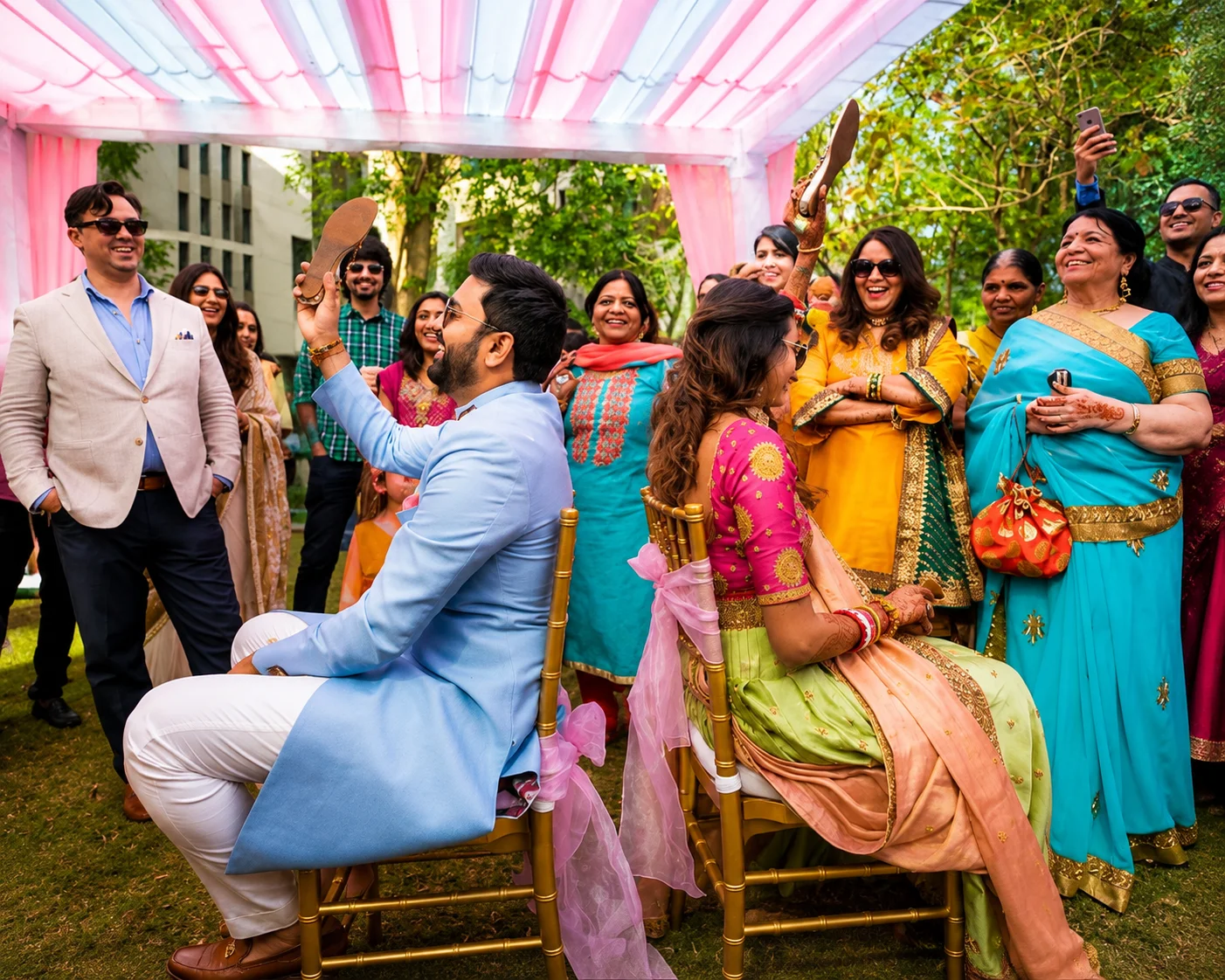
Where Couples Overspend on Weddings, and How to Cut Costs Without Cutting Corners
THE WEDDING CO. GUIDE
| Smart wedding budgeting is not about making the celebration feel smaller. It is about identifying the expenses guests barely notice—and protecting the details they genuinely experience. |
Most couples do not overspend because they choose one extravagant element. Wedding budgets usually expand through a series of small decisions: an upgraded menu here, an extra installation there, a larger room block, another transport route, one more performance. Each choice feels manageable in isolation. Together, they can move the wedding far beyond the original budget.
The solution is not to remove everything special. It is to separate visible value from invisible cost. These are the categories where wedding expenditure most often grows—and the questions that help couples spend more intentionally.
Are You Paying for More Guests Than Will Actually Attend?
Guest count affects almost every wedding cost: venue capacity, food, beverages, seating, invitations, gifts, transportation and accommodation. Yet couples often budget against an early invitation list rather than a realistic attendance estimate.
A long guest list also pushes the wedding into larger venues and bigger production requirements. The most effective saving may therefore happen before a single vendor is booked. Create separate figures for invited guests, likely attendees and guests requiring rooms.
THE SMARTER CUT: Finalise the guest list early and track confirmations by function. A smaller, well-hosted celebration usually feels more generous than a larger wedding where the budget is stretched across every guest.
Are You Comparing Venue Rental—or the Total Venue Cost?
A venue with a low rental can become expensive after food and beverage minimums, room commitments, mandatory technical services, power, security, overtime, corkage, taxes and restricted vendor charges are added.
Couples also overspend when they select a venue that must be heavily transformed. A space that already suits the scale and atmosphere of the wedding may require far less décor and production.
THE SMARTER CUT: Compare venues using one complete cost sheet. Include every compulsory charge and estimate what each property needs before it delivers the experience you want.
Does Every Wedding Function Need the Same Scale?
A multi-day wedding does not require every event to have the largest guest list, the most elaborate menu and a completely new visual world. Treating the Mehendi, Sangeet, ceremony, reception and brunch as equal headline events quickly multiplies costs.
Decide which functions deserve the strongest investment. A relaxed welcome dinner can be intimate. A daytime function can use the venue’s landscape and natural light. A brunch may need excellent food and music rather than extensive production.
THE SMARTER CUT: Build a hierarchy of events: one or two signature moments, then simpler supporting celebrations with their own character.
Are You Decorating Areas Guests Will Barely Notice?
Décor overspending often comes from covering every surface instead of creating a few powerful moments. Repeated stage builds, dense florals, oversized entrances and installations in low-traffic areas can consume budget without improving the guest experience.
Before approving a design, ask where guests will arrive, gather, dine, dance and take photographs. Those zones deserve attention. Existing architecture, gardens, candlelight, fabric, foliage and intelligent lighting can create an atmosphere without relying entirely on flowers.
THE SMARTER CUT: Prioritise the mandap or stage, entrance, dining environment and one memorable photo moment. Reuse structures or furniture across functions when the transition can be handled elegantly.
Is the Menu Bigger Than the Experience Requires?
More counters do not automatically create better hospitality. Extremely large menus can increase food cost, staffing, equipment, space and wastage while making the dining experience confusing.
Guests tend to remember quality, service, temperature, presentation and a few distinctive dishes. They rarely count how many cuisines were offered. Premium ingredients should be used where they make a noticeable difference, not added simply to make a menu sound expensive.
THE SMARTER CUT: Choose fewer, stronger dishes; design each menu for the time of day and function; and invest in service flow. A beautifully edited menu feels more luxurious than an excessive one.
Are You Buying Entertainment—or Designing Energy?
Celebrity artists can be exceptional, but a large fee does not guarantee the right atmosphere. Couples may overspend on one performance while underfunding sound, lighting, the DJ, transitions and the after-party that determine how the entire evening feels.
Start with the experience: elegant background music, a high-energy Sangeet, an immersive cocktail evening or a late-night celebration. The right band, DJ, emcee, family performance or interactive act may serve that purpose better than the most recognisable name.
THE SMARTER CUT: Protect production quality and programme flow first. Spend on a headline act only when the artist is genuinely central to the celebration.
Are Photography Packages Being Compared Like for Like?
Photography costs expand through additional teams, hours, functions, edits, albums, drones, same-day films, reels and pre-wedding shoots. Packages that look similar may include very different coverage and deliverables.
Underbooking can also be expensive if overtime and last-minute team additions are charged later. The answer is not automatically the smallest package; it is the package accurately matched to the wedding schedule and guest count.
THE SMARTER CUT: Define the moments and outputs that matter, then compare team size, hours, turnaround and deliverables line by line.
Have Hospitality and Transport Been Planned Early Enough?
Last-minute room additions, scattered hotel bookings, too many vehicle types and poorly planned routes can turn guest logistics into a major overspend. They also create the kind of friction guests notice immediately.
Consolidate guests into practical room blocks, request realistic arrival details and design transport around shared routes. Keep contingency vehicles, but avoid booking an oversized fleet for the entire day.
THE SMARTER CUT: Plan hospitality as one coordinated operation. Early information and centralised decisions reduce both cost and confusion.
Are Last-Minute Changes Consuming the Contingency?
Late upgrades are rarely evaluated against the full budget. Another counter, car, room, installation or hour of music may appear modest, but repeated changes create overtime, rush fees and knock-on costs across several vendors.
Protect a contingency rather than treating it as available spending. Any new request should be reviewed against three questions: Will guests notice it? Does it support a priority? What must change elsewhere to pay for it?
THE SMARTER CUT: Freeze major decisions by an agreed date and route every later addition through one budget owner—ideally the planner or a designated family decision-maker.
What Should Couples Never Cut From a Wedding Budget?
Do not cut the elements that make the wedding safe, comfortable and well run. Adequate food, reliable power, sound quality, weather planning, transport, staffing, permissions and experienced on-ground management are not decorative extras. They are the infrastructure supporting every beautiful moment.
The best wedding cost-cutting strategy is therefore selective. Reduce duplication before quality. Reduce quantity before service. Reduce invisible additions before the moments guests will remember.
| THE WEDDING CO. PERSPECTIVE At The Wedding Co., we believe a considered wedding is not defined by how much is included. It is defined by how clearly every decision supports the couple, their guests and the experience they want to create.Cutting costs should never mean cutting care. It should mean removing what does not matter so there is more room for what does. |