
What to Look for in a Destination Wedding Venue For 200–250 Guests
THE WEDDING CO. GUIDE
| The right destination wedding venue does more than fit 250 chairs. It must comfortably host the celebration, accommodate the guest journey and support every operational detail behind it. |
A destination wedding for 200–250 people sits in an important middle ground. It is large enough to require serious accommodation, transport, catering and production infrastructure, but intimate enough for the venue to shape the entire guest experience.
That is why capacity alone is a poor way to choose. A hotel may advertise space for 300 guests and still feel crowded once a mandap, stage, dance floor, buffet, bars, technical consoles and service routes are added. The better question is whether the property works as one connected wedding destination.
Can the Venue Comfortably Host 200–250 Guests?
Always ask for seated and standing capacities by event format—not one headline number. A ballroom that fits 250 for cocktails may not fit 250 for a seated reception with a stage and dance floor. An outdoor lawn may look expansive but lose usable area after production, catering and weather structures are installed.
Request floor plans and test the actual layouts for the ceremony, Sangeet, reception and dining. Guest movement should feel easy, tables should not be compressed, and important sightlines should remain clear.
ASK THE VENUE: Can you show us a completed layout for 250 guests with every production and catering element included?
Are There Enough Distinct Event Spaces?
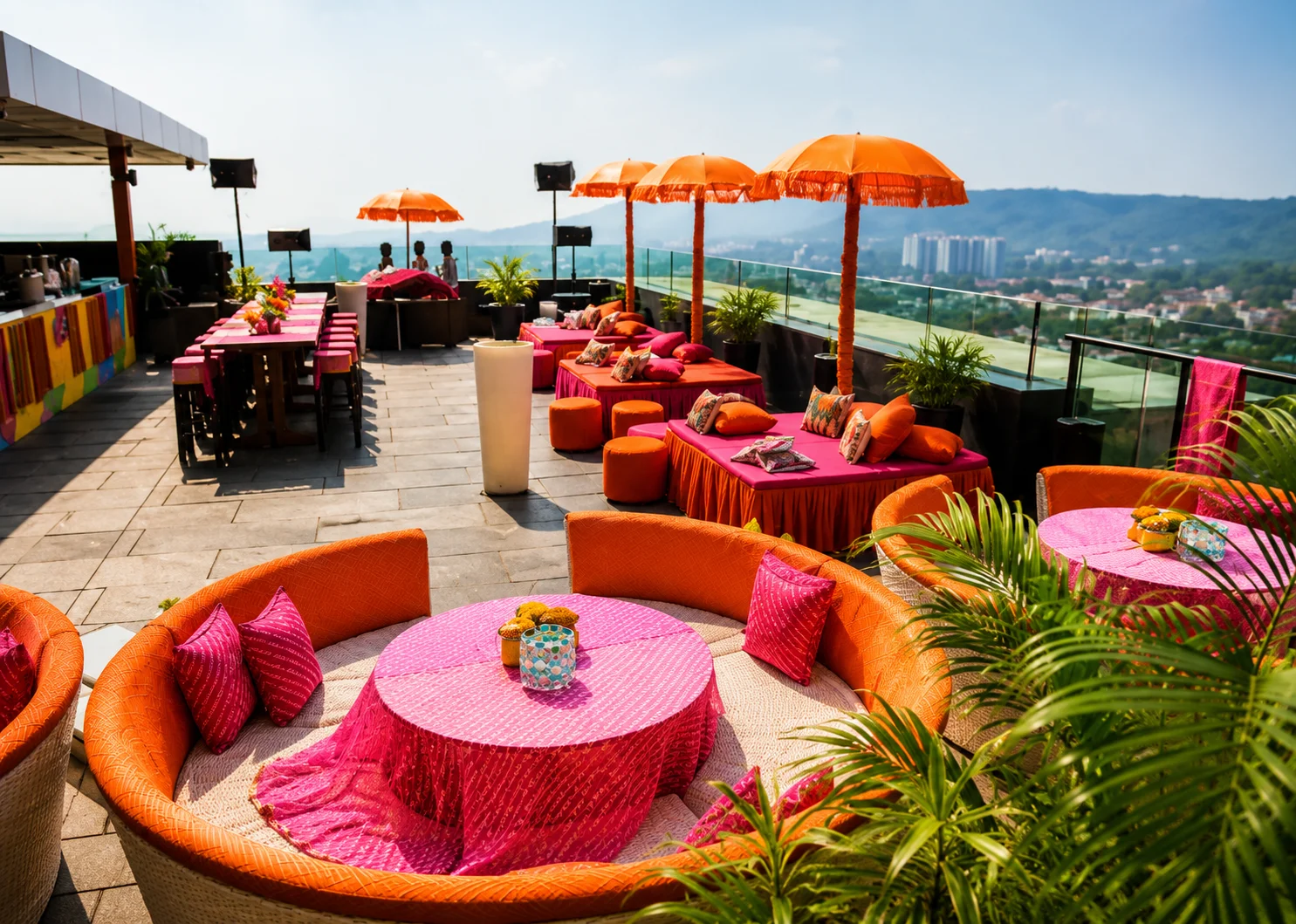
A destination wedding usually involves several functions, each needing its own atmosphere. The strongest properties offer a useful mix: perhaps a lawn for the ceremony, a ballroom for the Sangeet, a terrace for cocktails and a relaxed poolside space for a welcome lunch or brunch.
Distinct does not have to mean distant. If guests must travel across a large resort or between separate properties, transport and coordination become more complicated. Also ask whether spaces can be used exclusively or whether another wedding may be taking place nearby.
ASK THE VENUE: Which spaces are available for each function, and what exclusivity is guaranteed in writing?
Does the Venue Have the Right Number of Rooms?
For 200–250 guests, room inventory is often more important than event capacity. Depending on family groupings and sharing arrangements, the wedding may require roughly 90–125 rooms per night. That number should be calculated from the guest list rather than assumed.
Confirm room categories, extra-bed policies, check-in timing, accessibility, family proximity and the number of rooms that can be blocked. If guests must be split across hotels, understand the travel time and cost of running continuous shuttles.
ASK THE VENUE: How many rooms can be contractually reserved, for which nights, and what happens if pickup is lower or higher than forecast?
How Easy Is It for Guests to Reach the Destination?
A beautiful property can become difficult if it is several hours from the nearest airport, has limited flight options or sits on a route affected by traffic, weather or seasonal closures. Accessibility influences arrival waves, transport fleet size, hospitality staffing and how tired guests feel before the first function.
Map the journey door to door. Review flight connectivity, rail options, road quality, transfer time and late-night arrivals. Elderly guests, children and international travellers may need additional support.
ASK THE VENUE: What are the most reliable arrival routes, realistic transfer times and transport restrictions for coaches or larger vehicles?
Can the Venue Support Your Catering Plan?
Food is central to the destination wedding experience. Establish whether catering is in-house, whether outside caterers are permitted and what kitchen, storage, loading and service infrastructure is available. Restrictions on regional specialists, live counters, alcohol or late-night food can materially change the celebration.
For 250 guests, service flow matters as much as menu variety. There must be enough space for back-of-house preparation, buffet placement and replenishment without creating queues or visible operational clutter.
ASK THE VENUE: What is included in the per-person price, which cuisines can be executed well, and what charges apply to outside teams or special setups?
What Happens If the Weather Changes?
An outdoor setting should never be selected without a credible backup plan. Rain, wind, extreme heat, cold, humidity and local sound restrictions can affect décor, guest comfort and production. A small indoor room described as a backup is not sufficient if it cannot hold the full guest list in the intended format.
Ask to see the contingency space laid out for 250 people. Understand the decision deadline for moving indoors and who absorbs costs for waterproofing, cooling, heating, flooring or structural changes.
ASK THE VENUE: What is the full-capacity weather plan for each outdoor event, and which contingency costs are already included?
Are Production and Entertainment Requirements Feasible?
Large performances and elaborate décor require adequate power, rigging, loading access, ceiling height, backstage space and setup time. Heritage buildings, beaches and remote resorts may have restrictions that are not obvious during a site visit.
Confirm sound curfews, decibel limits, fireworks and drone rules, generator locations, vehicle access and vendor working hours. A venue that looks perfect but cannot support the desired production may become expensive to adapt—or impossible to use as planned.
ASK THE VENUE: What technical services are mandatory, what restrictions apply, and can our production team complete a technical recce before contracting?
Will Guest Movement Feel Effortless?
Destination weddings are remembered through transitions: airport to hotel, room to function, ceremony to cocktails and celebration to after-party. Long walks, confusing routes, insufficient buggies, poor lighting and distant washrooms quickly undermine an otherwise luxurious experience.
Walk every guest route at the same time of day the function will occur. Check lifts, ramps, stairs, signage points, buggy availability, parking, washrooms and accessibility for elderly or mobility-limited guests.
ASK THE VENUE: How will 250 people move between rooms and events, and what mobility support is available throughout the wedding?
What Is Included in the Venue Quote?
Destination wedding venue costs extend beyond room rates and food. Minimum revenue commitments, taxes, service charges, space rental, furniture, power, housekeeping, security, vendor meals, corkage, overtime and mandatory suppliers can significantly alter the total.
Request one consolidated estimate based on the complete wedding programme. Compare properties on total event cost rather than the most attractive individual rate. Also review payment schedules, attrition clauses, cancellation terms and force-majeure provisions carefully.
ASK THE VENUE: Can you provide an itemised estimate for all functions, rooms and compulsory services, including taxes and likely overtime?
What Should You Notice During a Destination Wedding Venue Visit?
Do not tour only the photogenic spaces. Visit guest rooms, kitchens, loading areas, washrooms, backup venues and transport drop-off points. Check mobile connectivity, power reliability, signage routes and the distance between the farthest room and each function space. If possible, view the property while another event is being set up; operations reveal more than an empty ballroom.
Most importantly, observe how the venue team responds. Clear answers, detailed plans and transparent costing are often better indicators of a successful wedding than a dramatic view alone.
| THE WEDDING CO. PERSPECTIVE At The Wedding Co., we evaluate destination wedding venues as complete guest experiences—not isolated event spaces. The right property should make 200–250 people feel comfortably hosted while giving every function the setting, infrastructure and support it needs. A memorable venue is not simply beautiful in photographs. It is the one where the entire wedding works beautifully. |