
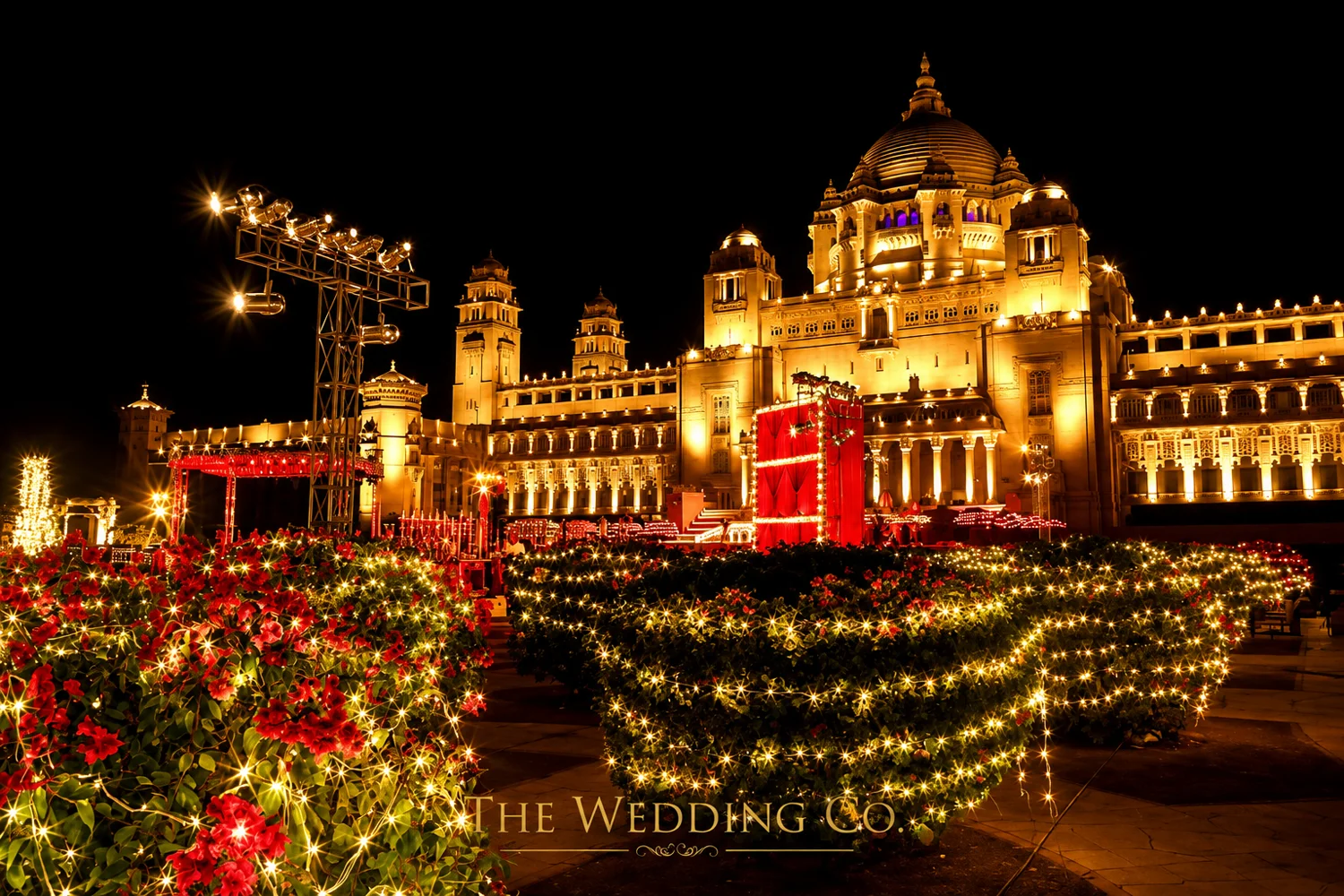
How to Plan a Destination Wedding in India
THE WEDDING CO. GUIDE
| A destination wedding in India is not simply a wedding held away from home. It is a multi-day guest journey connecting travel, accommodation, celebrations, hospitality and the character of the destination. |
India offers palaces, beaches, mountains, heritage properties, vineyards, forest retreats and city hotels, but the right destination is not only the most photogenic. It must work for the guest list, season, travel routes, room requirements, functions and budget.
The easiest way to plan is to treat the wedding as one connected operation. Every venue decision affects rooms, transport, catering, production and guest comfort. The following questions create a practical sequence from destination selection to final execution.
How Do You Choose the Right Destination in India?
Begin with the experience: heritage and ceremony, beach and relaxation, mountain intimacy, urban convenience or resort privacy. Then test accessibility. Review flights or trains, airport-to-hotel time, road conditions, seasonal travel and the needs of elderly guests, children and international travellers.
Consider climate at the exact event hours, not only the destination’s general reputation. Monsoon patterns, heat, humidity, cold, wind and sunset time influence the venue, décor, attire and programme.
PLAN THIS FIRST: Choose the destination at the intersection of atmosphere, accessibility, season, guest comfort and total cost.
How Many Guests Should You Invite?
Destination weddings are usually more sensitive to guest count because almost every attendee may need rooms, transfers and extended hospitality. Separate invited guests, likely attendees, room-sharing groups and the guest count for each function.
A 200-person destination wedding can require roughly 90 to 125 rooms depending on family structure and sharing. Calculate from the actual list rather than relying on a standard assumption.
PLAN THIS FIRST: Build the first rooming estimate alongside the guest list, before requesting venue proposals.
How Do You Set a Destination Wedding Budget?
The budget should include venue spaces, food and beverages, accommodation, décor, production, photography, entertainment, planning, transport, hospitality, invitations, gifting, travel, permits, taxes and contingency.
Clarify who is paying for guest rooms and travel. This decision can change the budget substantially. Compare destinations using the complete cost of hosting the wedding, not a room rate or venue rental in isolation.
PLAN THIS FIRST: Set one maximum comfortable spend, define what is hosted for guests and reserve a contingency before selecting optional upgrades.
What Should You Look for in a Destination Wedding Venue?
The property should have event spaces suited to each function, enough rooms, reliable service infrastructure and a full-capacity weather alternative. Ask for seated layouts that include stages, mandaps, dance floors, catering and technical consoles.
Understand exclusivity, other events on property, sound rules, vendor access, power, kitchens, loading routes, guest mobility and the distance between rooms and functions. A resort can be beautiful and still be operationally difficult.
PLAN THIS FIRST: Evaluate the property as a guest journey and production site, not only as a collection of photographs.
What Should the Venue Contract Include?
Confirm dates, spaces, setup periods, room inventory, rates, food-and-beverage commitments, taxes, service charges, furniture, power, security, corkage, vendor policies, overtime and backup spaces. Every verbal promise should appear in writing.
Review payment schedules, attrition, room-release dates, cancellation, postponement and force-majeure provisions with appropriate professional advice. Destination weddings involve interconnected commitments, so one change may affect several contracts.
PLAN THIS FIRST: Request one itemised commercial summary covering rooms, events and every mandatory service before paying the deposit.
When Should You Send Save-the-Dates?
Guests need time to plan leave, travel, documentation and family arrangements. Send save-the-dates once the dates, destination and core accommodation plan are secure—often six to nine months ahead, and earlier for international or high-demand travel periods.
Provide essential information first: dates, destination, closest airport or station and when formal travel details will follow. Do not send uncertain room or flight guidance simply to make the communication feel complete.
PLAN THIS FIRST: Communicate early, but release only confirmed information through one trusted guest channel.
How Do You Plan Guest Accommodation?
Create room blocks based on sharing groups, children, accessibility, family proximity, VIP requirements and early arrivals. Confirm check-in and checkout times, extra beds, breakfast, room-service policies and luggage storage.
If guests are split across properties, minimise the number of hotels and understand the shuttle operation. Track pickup against contractual deadlines so rooms can be adjusted before penalties or shortages appear.
PLAN THIS FIRST: Maintain one live rooming list owned by the hospitality team and reviewed against the contract regularly.
How Should Guest Transport Be Organised?
Map every route: airport or station to hotel, hotels to functions, late-night return journeys and departures. Build schedules using real travel times and likely traffic. Group arrivals are practical and keep contingency vehicles.
Guests should receive a transport contact and clear pickup messages. Track major flights and trains, but avoid designing an individual car movement for every guest unless the service level and budget require it.
PLAN THIS FIRST: Create route-based transport plans with buffers, live guest information and one central control desk.
Which Vendors Should Travel and Which Should Be Local?
Some couples travel with their planner, photographer, beauty team, designer or specialist caterer for creative consistency. Local vendors can reduce travel and accommodation costs and bring knowledge of the venue, permits and supply chain.
Compare capability, not geography alone. Include flights, rooms, meals, local transport, freight and additional working days in the total. Confirm which venue services are mandatory and whether outside vendors attract fees.
PLAN THIS FIRST: Travel the teams whose style or expertise is difficult to replace; use qualified local partners where infrastructure and regional knowledge matter.
What Permissions and Local Rules Should You Check?
Requirements vary by location, venue and event. Sound, alcohol, drones, fireworks, temporary structures, beaches, heritage sites and public spaces may require permissions or face restrictions. Ask the venue and planner to identify responsible authorities and application timelines.
Do not rely on informal precedent from another wedding. Rules, enforcement and permitted hours can change, and approvals should be documented before commitments are made.
PLAN THIS FIRST: Create a written permissions register showing the requirement, applicant, deadline, status and approved conditions.
How Do You Design the Wedding Around the Destination?
Use the destination as a source rather than a theme to copy literally. Architecture, landscape, crafts, food, music and local materials can shape the guest experience in a refined way.
Not every function needs an elaborate transformation. A daytime event may benefit from natural surroundings; the evening can introduce stronger lighting and production. Build one design language and let each space express it differently.
PLAN THIS FIRST: Enhance what is distinctive about the setting and invest most where guests gather, dine, celebrate and take photographs.
What Weather Contingencies Are Essential?
Every outdoor function needs an indoor or covered alternative that holds the full guest list and essential setup. Review rain, heat, humidity, wind, cold and air quality. Agree on the forecast source, decision time and decision-maker.
Budget for cooling, heating, flooring, waterproofing or duplicate infrastructure if the season requires it. The backup should be designed, not described vaguely as available.
PLAN THIS FIRST: Approve the complete backup layout and commercial implications before confirming the outdoor plan.
How Far in Advance Should You Plan?
Twelve months is comfortable for many destination weddings, but date demand, property size and guest travel matter more than one rule. Secure the planner, destination, venue and room block first; then major creative vendors, guest communication and travel operations.
By the final month, rooms, transport, menus, layouts, vendor schedules, payments, permissions and contingency plans should be confirmed. The last weeks are for accurate execution rather than major redesign.
PLAN THIS FIRST: Work backwards from guest travel and venue deadlines, not only from the wedding date.
What Makes a Destination Wedding in India Feel Effortless?
Guests should know where to go, how they will travel, what is being hosted and whom to contact. Rooms should be ready, transitions should be short, food should reflect the occasion and the programme should leave enough time to enjoy the destination.
Behind that ease is one connected plan covering guest information, venue operations, vendor timelines, budgets and decisions. The destination provides the setting; thoughtful hospitality turns it into the wedding experience.
| THE WEDDING CO. PERSPECTIVEAt The Wedding Co., we believe a destination wedding succeeds when the place, people and planning feel inseparable. Every decision should make the destination easier to experience and the celebration more personal.The goal is not simply to take the wedding somewhere beautiful. It is to make that place feel, for a few unforgettable days, entirely your own. |