
How Do I Find the Décor Theme That Works Best for My Wedding?
THE WEDDING CO. GUIDE
| The best wedding décor theme is not the trendiest one. It is the visual language that feels natural to the couple, works with the venue and creates the right experience within the available budget. |
Finding a wedding décor theme can feel difficult because inspiration is everywhere. One image suggests a romantic garden, another an editorial ballroom, and a third a colourful maximalist celebration. Saving all three does not mean the wedding needs to become all three.
A décor theme should not begin as a label. Begin with the atmosphere, setting and priorities, then build a coherent visual direction from them. The following questions help turn scattered references into a design that belongs to your wedding.
How Do You Want the Wedding to Feel?
Start with emotion before colour. Do you want the celebration to feel intimate, joyful, dramatic, relaxed, romantic, modern, festive or deeply traditional? Two weddings can use the same flowers and still feel completely different because of lighting, scale, music and how guests move through the space.
Choose three words that describe the experience. They become a filter for later decisions. If a reference looks beautiful but does not support those words, it may not belong in the design.
USE THIS TEST: Describe the wedding in three feeling words before choosing a palette, flower or theme name.
What Does the Venue Already Give You?
The venue is the largest visual element in the wedding. A palace, beach, garden, modern hotel and heritage courtyard each have their own architecture, colours, scale and natural focal points. A strong design responds to those qualities instead of covering them.
Notice the flooring, walls, ceiling height, landscape, furniture, entrances and available light. Ask what needs to be enhanced, what should remain untouched and what genuinely needs to be transformed.
USE THIS TEST: If the design must fight the venue to work, it is probably the wrong direction—or the wrong venue.
Which Personal Details Actually Represent You?
A wedding feels personal when the design is connected to the couple rather than assembled from generic trends. Look at your home, travel, fashion, art, family traditions and the places or objects you repeatedly choose.
Personalisation does not require monograms on every surface. It may appear through a textile, a family craft, a favourite flower, a meaningful menu, a piece of music or the way guests are welcomed.
USE THIS TEST: Choose two or three genuine references from your life and translate them subtly rather than creating a literal theme.
How Should You Use Wedding Inspiration Images?
Pinterest and Instagram are useful for identifying patterns, but individual images rarely show the venue, budget, production or season behind them. Save references by category—ceremony, dining, lighting, florals, furniture and stationery—then look for repeated qualities.
You may discover that the common thread is not a theme at all. It may be warm lighting, sculptural flowers, layered textiles, clean lines or saturated colour. Those repeated choices are more useful than copying one wedding.
USE THIS TEST: Ask what specifically you like in every image. Keep the element, not necessarily the entire scene.
How Do You Choose a Wedding Colour Palette?
Begin with the venue and season, then select a small family of colours with room for tonal variation. A palette does not mean every object must match. It means the flowers, textiles, stationery, lighting and outfits can coexist without visual conflict.
Consider how colours change from daylight to warm evening light and how they photograph against the venue. Also decide whether the couple’s outfits should blend with the setting or become a deliberate contrast.
USE THIS TEST: Test material and floral samples in the actual venue light before approving the final palette.
Should Every Wedding Function Have a Different Theme?
Different functions should feel distinct, but they do not need to look unrelated. A completely new theme for every event can increase design and production costs while making the wedding feel fragmented.
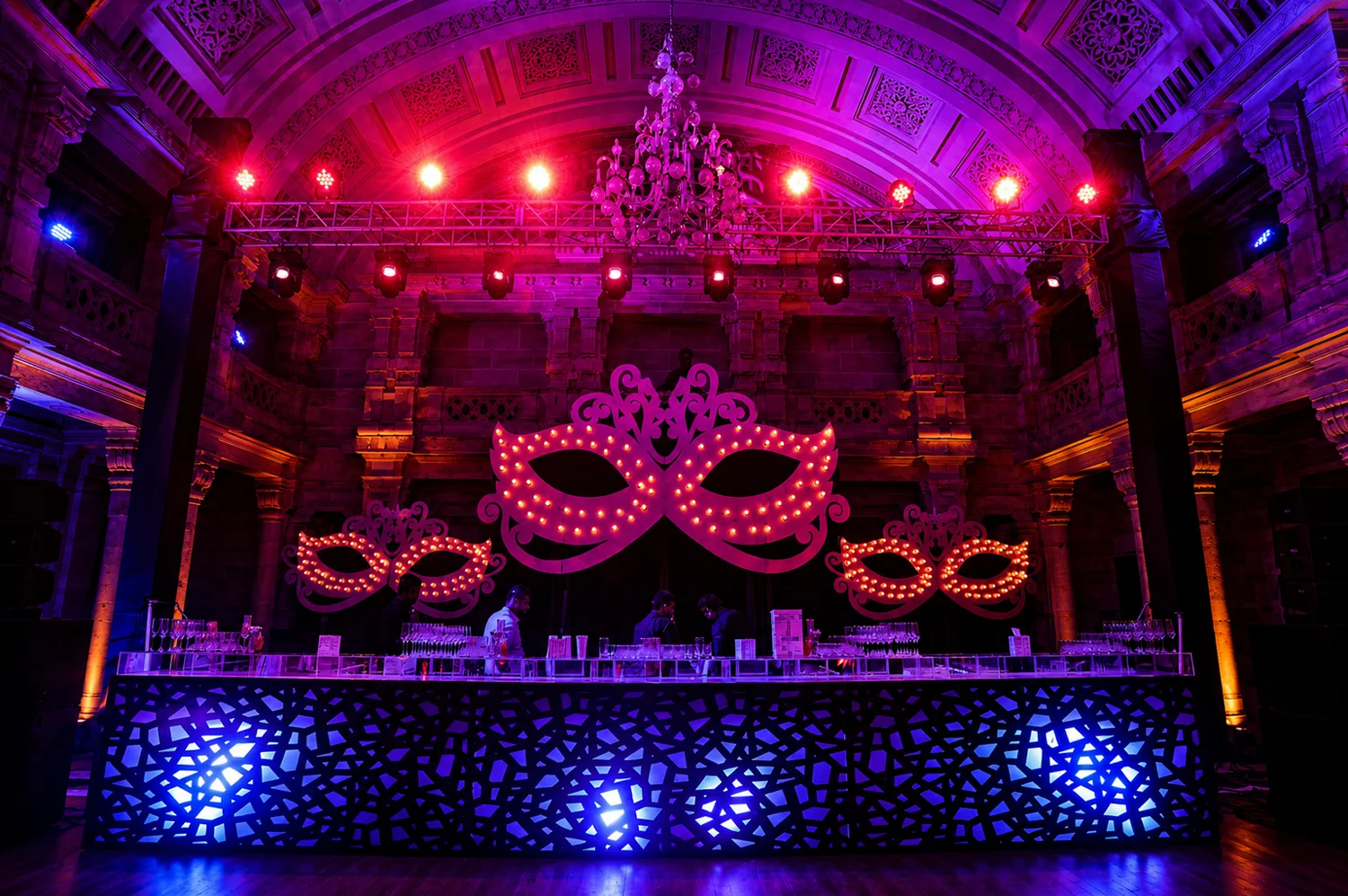
Create one overarching design language, then vary the energy. A daytime Mehendi might use brighter colour and relaxed seating; the Sangeet may become more theatrical; the ceremony may feel refined and meaningful. Repeated materials, typography or details can connect them.
USE THIS TEST: Aim for chapters of the same story—not separate weddings competing for attention.
How Does the Season Affect Wedding Décor?
Season influences flowers, comfort, lighting and the practical performance of materials. Delicate blooms may struggle in extreme heat, while heavy structures and fabric require additional planning in wind or rain. Sunset time changes the lighting plan for outdoor ceremonies.
Using seasonal flowers and materials can improve quality and reduce the need to source fragile elements from far away. Weather contingencies should be designed from the beginning, not added after the décor is approved.
USE THIS TEST: Choose a visual direction that remains beautiful under the destination’s real weather conditions.
How Do You Make the Décor Work Within Your Budget?
Décor budgets expand when every area is treated as equally important. Map the guest journey: arrival, ceremony, dining, dancing and photography. Invest where guests gather and where meaningful moments happen.
A strong mandap, thoughtful lighting, a well-designed dining environment and one memorable installation may create more impact than covering the entire venue in flowers. Reusing structures, furniture or florals across functions can also work when transitions are designed carefully.
USE THIS TEST: Prioritise focal moments, reduce repetition and spend on scale only where it changes the experience.
What Should You Ask a Wedding Decorator or Designer?
Share the venue, function schedule, guest count, budget and feeling words before asking for concepts. A good designer should explain how the proposal responds to the setting, what drives the cost and which elements can be simplified without losing the idea.
Request mood boards, material references, floor plans and an itemised scope. Confirm what is rented or fabricated, which flowers are seasonal, what production is separate, and how weather or venue restrictions affect the plan.
USE THIS TEST: Can the designer explain the purpose, cost and practical requirements of every major element—not just show an attractive rendering?
How Do You Know When the Décor Theme Is Right?
The right direction should feel recognisably yours without requiring a long explanation. It should work with the venue, adapt across functions and remain achievable within the budget. The couple’s attire, invitations, lighting and guest experience should all make sense beside it.
If the concept depends on copying one photograph exactly, contains too many competing ideas or requires constant additions to feel complete, refine it. Strong wedding design is usually clear enough to edit.
USE THIS TEST: Remove one major element. If the concept still feels coherent, the design has a strong foundation.
So, What Wedding Décor Theme Should You Choose?
Choose the direction created by the intersection of five things: how you want the wedding to feel, what the venue naturally offers, the details that genuinely represent you, the season and the amount you are comfortable spending.
You may eventually call it modern romance, contemporary Indian, garden elegance or maximalist celebration. The label matters less than the consistency of the decisions beneath it.
| THE WEDDING CO. PERSPECTIVEAt The Wedding Co., we believe wedding design should feel discovered rather than imposed. The most memorable themes emerge when the couple, venue and celebration are understood before the first mood board is created.The objective is not to decorate more. It is to make every visual choice feel as though it could belong nowhere else. |